
Why the Supreme Court's Silence Speaks Volumes on AI Art Copyright
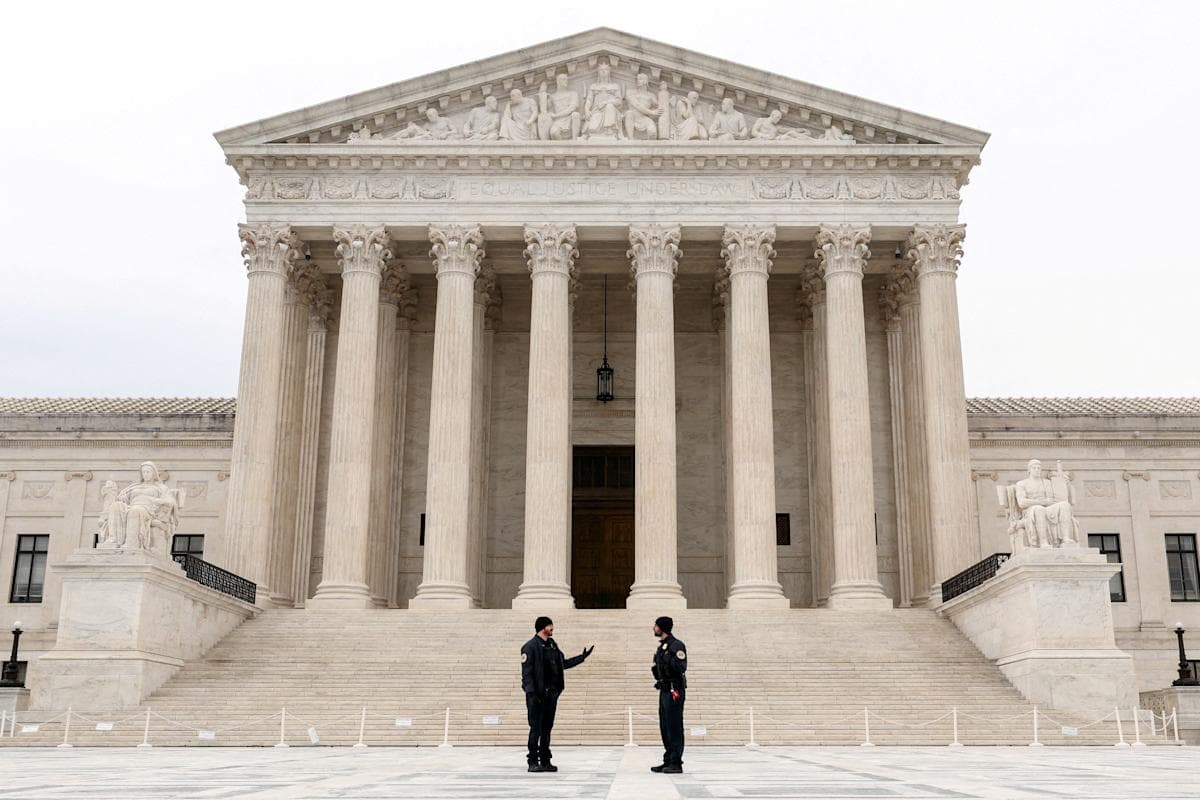
The legal battle over AI-generated art reached a critical juncture when the U.S. Supreme Court refused to consider an appeal regarding the copyrightability of artworks produced solely by artificial intelligence. This refusal means that a federal judge's and a U.S. Court of Appeals' earlier decisions stand: only works created by a human author are eligible for copyright protection. The core of the issue stems from a 2018 application by computer scientist Stephen Thaler, who sought to copyright an artwork titled "A Recent Entrance to Paradise," generated by an AI system he created.The U.S. Copyright Office rejected Thaler's application in 2022, citing the absence of human authorship. Thaler pursued appeals through the court system, arguing that his AI system, dubbed Creativity Machine, should be considered the author, or at least that he, as the system's creator, should hold the copyright. Yet, the Supreme Court's decision not to intervene effectively reinforces the status quo, leaving AI creators without a clear path to federal copyright protection for their non-human-assisted works, according to Engadget.
This isn't an isolated incident of the Supreme Court sidestepping intricate digital copyright and privacy issues. Historically, the Court has shown a reluctance to delve into detailed analyses of emerging digital legal challenges. For instance, it recently declined an NFL subscriber's challenge concerning the sharing of video-viewing information with Meta, reflecting a broader trend of not engaging with the scope of federal video privacy law, Law360 reports. This pattern suggests the Court may be prioritizing other legal matters over rapidly evolving technological questions.
The Human Element: A Persistent Barrier in the Age of AI Creativity
The obvious question: why would a company this profitable need more capital? While Thaler's case focused on purely AI-generated art, the broader legal landscape for AI and copyright remains highly contentious. Courts are currently grappling with various aspects of AI's impact on creative industries, from large language models trained on copyrighted material to the legal standing of AI-assisted creations. A federal judge recently rejected the New York Times Co.'s bid to block a deposition of an expert in its ongoing copyright lawsuit against OpenAI Inc., indicating the active and complex nature of these disputes, according to Bloomberg Law News.This ongoing litigation highlights the legal system's struggle to define ownership and originality when AI tools play a significant role. The "human authorship" requirement, now reaffirmed by the Supreme Court's non-decision, poses a fundamental challenge for developers pushing the boundaries of AI's creative capabilities. It suggests that for a work to receive legal protection, there must be a discernible human hand guiding, modifying, or originating the creative expression, beyond merely prompting an AI. This means that even if a composer asserts a right to reclaim copyright after a specific period, like the 35-year window mentioned in a recent dispute over a college fight song, per Billboard, the initial work still needs to be human-created to be eligible for such a claim.
Navigating the "Shadow Docket" and Future of AI Legal Battles
Most analysts stop here. The real story is what happens next, or rather, why the highest court opted out entirely. The Supreme Court's decision to decline Thaler's case also illuminates its internal workings and potential reasons for avoiding complex, emerging legal questions. Justices Ketanji Brown Jackson and Brett Kavanaugh have publicly debated the Court's increasing use of the "shadow docket", emergency orders made without full argument or explanation, which can impact its willingness to take on new cases, as reported by Above the Law.Jackson noted that this extensive use of emergency orders wasn't the Court's stance "some 20 years ago" when she and Kavanaugh clerked, suggesting a shift in procedural priorities. This preference for handling certain types of cases via different procedural routes might explain why a complex, novel copyright question like AI art was bypassed. Thaler's lawyers lamented that even if the Court were to reconsider the Copyright Office's test in a future case, it would "be too late," arguing that the current decision will negatively impact the creative industry during "critically important years."