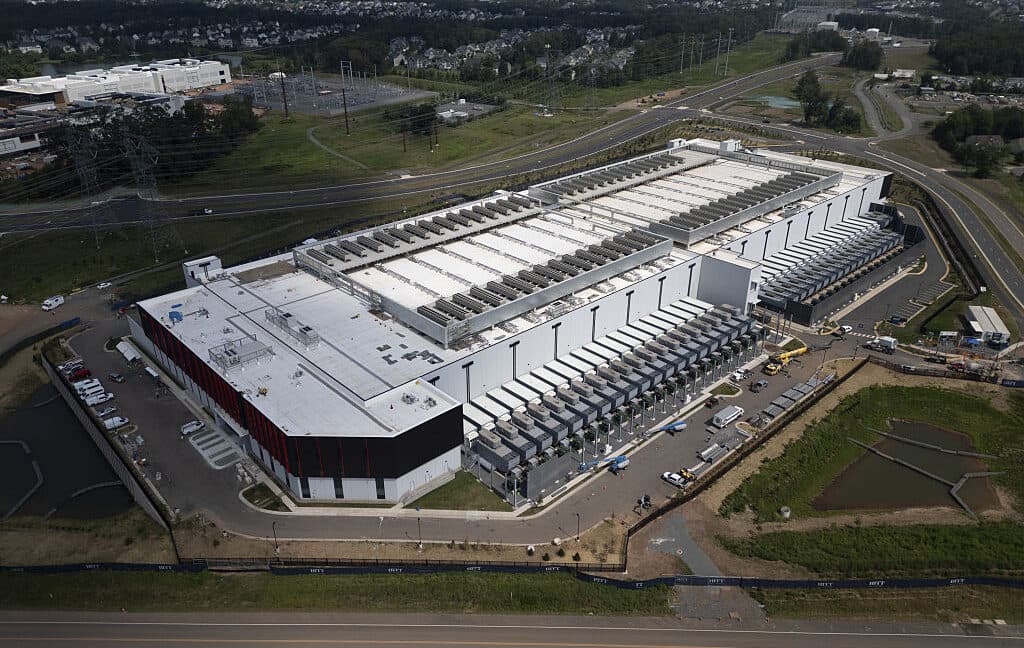

Major tech companies like Amazon, Google, and Microsoft are committing to build their own power plants for new data centers, aiming to prevent the massive energy demands of artificial intelligence from inflating consumer electricity bills. While hailed by the White House as a consumer protection measure, this ambitious pledge faces significant hurdles, including strained supply chains for critical components and questions about the long-term feasibility of independent power grids.
Why is Big Tech Making This Pledge?
The rapid expansion of data centers, crucial for running AI models, has created a significant surge in electricity demand. This surge is already translating into higher utility bills for residential customers. Nationwide, residential electricity costs rose by 6 percent in February compared to the previous year, according to the US Energy Information Administration. Some states, particularly those with dense clusters of data centers like New Jersey and Pennsylvania, saw even steeper increases, at 16 percent and 19 percent respectively. These rising costs have sparked public concern and political pressure, with legislators in many states, including New York, Maine, and Oklahoma, considering regulations or even temporary bans on new data centers, as reported by NPR. The White House pledge represents an effort to mitigate this political and consumer backlash.The Enormous Energy Demands of AI
The scale of energy consumption by AI data centers is staggering and projected to grow dramatically. Data from BloombergNEF indicates that US data center power demand is forecast to more than triple by 2035, escalating from approximately 35 gigawatts (GW) in 2024 to a projected 106 GW. This immense increase necessitates substantial new power generation capacity. To avoid long waits for grid connections—which can take up to four years—and potential political scrutiny, tech companies have already begun building their own power supplies for many new data centers. A significant portion of this planned generation, nearly three-quarters, relies on natural gas, as tracked by energy research firm Cleanview across 56 GW of projects in the US.US Data Center Power Demand Forecast
| Year | Projected Demand (Gigawatts) |
|---|---|
| 2024 | ~35 GW |
| 2035 | 106 GW |
What Are the Logistical Hurdles?
While the commitment to self-power sounds promising, the practicalities are daunting. The primary independent power supply for data centers often comes from gas turbines, which are currently in short supply. Industry competition for these turbines is fierce, leading to wait times as long as seven years for new orders. Manufacturers like GE Vernova have announced plans to expand production by 25 percent, and Mitsubishi Power intends to double its output over the next two years. However, these expansions may not be enough to meet the booming demand, with Global Energy Monitor reporting that two-thirds of gas projects in the US still haven't secured a turbine manufacturer. This scarcity also drives up prices, potentially impacting utilities and industrial customers, costs that could still trickle down to ratepayers.Furthermore, many of these power sources, including standard gas turbines, are not designed for the continuous, uninterrupted power supply that data centers require. "They say, 'we have documented evidence that these can run 90 percent of the time'… But that’s not the average use case," said Jigar Shah, an energy investor and former Department of Energy official. He also highlighted long-term challenges in securing spare parts and qualified technicians to keep these dedicated power plants operational for decades.