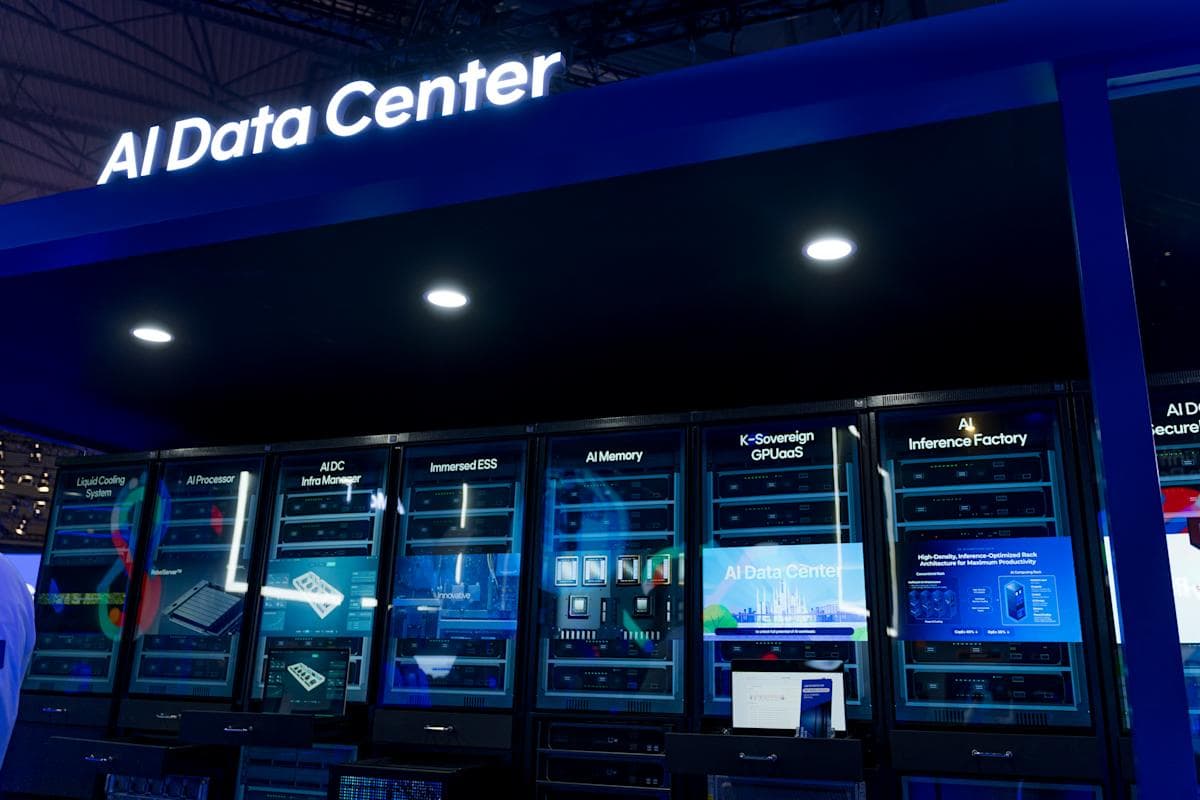

A recent UK trial has demonstrated that AI data centers can dynamically adjust their power consumption by up to 40% without disrupting critical operations. This capability, driven by software from Emerald AI and involving partners like NVIDIA and National Grid, offers a crucial solution to the escalating energy demands of AI infrastructure, promising greater grid stability and potentially faster data center development.
AI Data Centers Prove Dynamic Power Management Is Possible
The energy demands of artificial intelligence are growing at an unprecedented rate, putting immense strain on existing electrical grids. However, a recent five-day trial conducted in December 2025 at a London data center revealed a significant breakthrough: AI data centers can be "grid-aware," adjusting their energy draw on demand without compromising performance.In partnership with Emerald AI, NVIDIA, National Grid, Nebius, and the nonprofit Electric Power Research Institute, the trial simulated over 200 "grid events". During these tests, the data center successfully modified its energy use to requested levels, demonstrating a vital flexibility. It managed to reduce its power consumption by as much as 40 percent while maintaining all critical workloads.
The trial showcased impressive responsiveness. In one instance, the data center cut its power draw by 10 percent for up to 10 hours, reacting to simulated spikes in demand, such as those that might occur during soccer match halftimes. Another test saw the data center reduce its load by 30 percent in just 30 seconds, highlighting its capability for rapid demand response.
Why Grid-Aware AI Infrastructure Matters Now
The ability of AI data centers to dynamically manage power is more critical than ever. Projections indicate a massive increase in power demand, with global AI data center consumption estimated to reach 68 gigawatts (GW) by next year and balloon to 327 GW by 2030. This escalating demand raises concerns about grid stability and the potential for higher utility bills for consumers.Traditional data centers often operate with a continuous, "always-on" power draw, which can strain grids and drive up energy costs. The new dynamic approach, however, transforms these facilities into "grid-aware assets," as described by Josh Paker, NVIDIA's sustainability lead. "This trial proves that NVIDIA-powered infrastructure can act as a grid-aware asset, modulating demand in real-time to support stability," Paker stated. "By making AI workloads responsive, we accelerate deployment while reducing the need for costly grid upgrades."
These findings will serve as a blueprint for NVIDIA's planned 100MW "power-flexible AI factory" in Virginia. The organizations involved intend to share their data with the AI industry, regulators, and policymakers, aiming to influence future approaches. Beyond altruism, dynamic power management offers tangible benefits, including faster approvals for new data center grid connections and potential cost savings for operators by curbing usage during peak demand. Steve Smith, president of National Grid Partners, emphasized the goal: "We would love to get to a point where we can get customers on the network in two years, and this is part of that."
Engineering Solutions for the Power Bottleneck
The sheer scale of AI power demands is forcing a fundamental rethinking of data center infrastructure. Engineering advancements are now focused on developing higher-voltage, higher-efficiency architectures to address both power bottlenecks and labor constraints. This includes redesigning racks to offload power equipment into specialized sidecars and adapting innovations from other sectors like automotive and industrial applications.Companies like NextEra are actively investing in power generation to meet this surging demand. NextEra is collaborating with major hyperscalers (large-scale cloud providers) and plans to deliver an additional 15 GW of power to data centers by 2035, with 6 GW of that energy coming from gas-fired plants. The focus for engineers is now on treating power distribution as a first-order design problem, reconsidering conductor geometry, connector selection, and protection schemes to safely handle the increased voltages and currents required for AI workloads.
Beyond individual companies, governments are also stepping in. The U.S. Department of Energy, for example, has provided a $26.5 billion loan to Southern Company, Georgia Power, and Alabama Power to support infrastructure development. These combined efforts across engineering, private investment, and public policy are essential to scale AI infrastructure effectively.
The Regulatory and Political Landscape
The rapid expansion of AI data centers has not only created technical challenges but also sparked public and political debate. Concerns are growing about the impact of these energy-intensive facilities on local power grids and, crucially, on consumers' utility bills. For example, Loudoun County, Virginia, a major data center hub, reportedly generates about $990 million in tax revenue from its data centers. Yet, it highlights the increasing demand for energy resources like natural gas to power these facilities.President Trump has publicly addressed these concerns, proposing that major technology companies should build their own power plants to support AI data centers. His aim is to alleviate public fears that AI's energy consumption could "unfairly drive up their electric utility bills." This shift indicates a growing expectation that tech giants will take more direct responsibility for their energy needs, rather than solely relying on existing public grids.
Regional grid operators are also flagging potential issues. PJM Interconnection, which coordinates power in 13 states, has cautioned that rising demand from AI data centers could lead to an electricity supply shortfall of up to 60 GW over the next decade. Such warnings underscore the urgent need for innovative solutions like dynamic power management to ensure a stable and affordable energy future for AI and the broader economy.